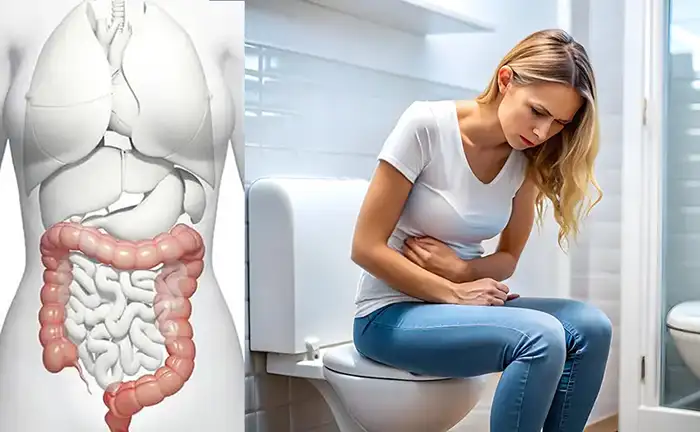
Why Severe Constipation Never Goes Away — And What the Research Says Actually Fixes It
Millions follow the standard advice — more fiber, more water, laxatives — and still wake up bloated and backed up. A gut motility researcher explains the cycle nobody's talking about.
By Dr. Susan Merrill, ND ·
Updated May 2026
·
11 min read
If you're dealing with severe or chronic constipation, you've probably been told some version of the same thing: drink more water, eat more fiber, take a laxative when it gets bad. For most people, this advice comes from a doctor they trust. And for most people, it doesn't work — at least not permanently.
The problem comes back. Sometimes within days. The bloating returns. The pressure returns. And every time it does, the cycle restarts: more fiber, another laxative, another round of waiting in discomfort.
Chronic constipation is increasingly understood as a motility dysfunction — a breakdown in the neuromuscular signaling that moves waste through the digestive tract — rather than simply a fiber deficiency.
Key Finding
Research published in Frontiers in Pharmacology and the American Journal of Gastroenterology suggests that chronic constipation in adults over 45 is primarily driven by impaired gut motility — a breakdown in the neuromuscular signaling system that coordinates intestinal movement — not by insufficient dietary fiber.
This is not a fringe position. Gastroenterologists have long recognized two distinct types of constipation: normal-transit constipation, where bulk and hydration interventions can help, and slow-transit constipation driven by motility dysfunction, where adding more fiber to a system that isn't moving can actually worsen the situation by increasing bulk in a blocked system.
For millions of adults — particularly women over 45 — the second type is the reality. And the standard advice is designed for the first.
Backed Up for Days? Why Constipation After 50 Is a Gut Motility Problem — Not a Fiber Problem
The digestive tract moves waste through a coordinated series of muscular contractions called peristalsis. This process is controlled by the enteric nervous system — sometimes called the "second brain" — a network of over 100 million nerve cells lining the gastrointestinal tract that operates largely independently of the central nervous system.
When the enteric nervous system functions well, waste moves through the colon in 24 to 48 hours. When it doesn't — due to chronic inflammation, microbiome disruption, age-related neurological decline, or repeated laxative use — transit time slows dramatically. What was a 36-hour journey becomes 72, 96, or more than 100 hours.
Signs Your Constipation Is Motility-Related — Not Just Dietary
Fiber supplements make bloating and discomfort worse, not better
Laxatives work initially but require higher doses over time
You go 3 or more days between bowel movements regularly
Bloating and abdominal pressure build throughout the day regardless of what you eat
You feel full or uncomfortable even after light meals
The problem has been gradually worsening over months or years
This slowing creates a cascade of secondary problems. Waste sitting in the colon for extended periods allows bacteria to ferment it, producing gas and contributing to the bloating and pressure that many chronic constipation sufferers describe as their most debilitating symptom. The longer waste remains, the more water is reabsorbed, making subsequent elimination increasingly difficult and painful.
"We keep treating the symptom with tools designed for a different problem. The motility pathway has been in the literature for decades. It just doesn't sell fiber supplements."
— Adapted from gastroenterology conference proceedings, 2024
Why Laxatives Stopped Working — And Why They're Making Chronic Constipation Worse
Stimulant laxatives — the most commonly used category — work by artificially triggering intestinal contractions. For acute, occasional constipation, this can be appropriate. For chronic constipation, it creates a dependency cycle that progressively weakens the gut's natural motility.
Research in the American Journal of Gastroenterology has documented that chronic stimulant laxative use is associated with progressive reductions in colonic nerve density and muscle function — meaning the gut becomes less capable of natural movement with each use, requiring the laxative more frequently just to maintain the same effect. The treatment accelerates the very problem it's supposed to solve.
63%
Of adults over 50 experience recurring constipation — yet fewer than 1 in 8 are told the underlying motility mechanism
$4.5B
Spent annually on laxatives and fiber supplements in the US — with over 80% recurrence within 6 months
72hrs+
Average transit time during a severe constipation episode — linked to systemic inflammation, fatigue, and mood changes
92%
Of participants in a gut motility study showed measurable improvement with targeted digestive support protocols
Natural Constipation Relief That Actually Works — What the Research Says About Probiotics and Gut Motility
The enteric nervous system retains significant capacity for recovery when the conditions driving dysfunction are addressed. Research has identified several natural compounds with documented effects on gut motility and the microbiome environment that supports it.
Specific probiotic strains — particularly Lactobacillus reuteri, Bifidobacterium longum, and Lactobacillus acidophilus — have shown measurable improvements in intestinal transit time in randomized controlled trials published in the American Journal of Clinical Nutrition. Ginger root extract has demonstrated prokinetic activity, meaning it directly stimulates the enteric nervous system to increase motility. Magnesium citrate at therapeutic doses supports smooth muscle function in the intestinal wall. Specific prebiotic fibers — including inulin and fructooligosaccharides — feed the probiotic strains that produce short-chain fatty acids, which are the primary fuel for the colonocytes lining the gut wall.
What researchers have explored is whether combining these ingredients in targeted ratios — addressing multiple points in the motility and microbiome pathway simultaneously — produces better outcomes than single-ingredient approaches. The short presentation below covers this research in full, including the specific morning protocol that has helped thousands of chronic constipation sufferers finally break the cycle.
Free Presentation — Watch Now
The Gut Motility Protocol That's Helping Chronic Constipation Sufferers Finally Find Lasting Relief
Covers the motility research, the specific compounds, and the morning protocol. No cost to watch.
Turn sound on. This presentation contains clinical references and viewer-reported results. Watch until the end for the full protocol.
Frequently Asked Questions
Why does constipation keep coming back even after trying fiber and laxatives?
Most standard constipation remedies address bulk and lubrication — they add fiber or stimulate a short-term laxative response. But research increasingly points to gut motility dysfunction — a breakdown in the neuromuscular signaling that coordinates intestinal movement — as the primary driver of chronic, recurring constipation. When that signaling is impaired, adding more fiber can actually worsen the situation by increasing bulk in a system that isn't moving.
What is gut motility dysfunction?
Gut motility refers to the coordinated muscular contractions that move food and waste through the digestive tract. Motility dysfunction occurs when these contractions become slow, weak, or disorganized — often due to neurological changes, inflammation, microbiome imbalance, or age-related decline in enteric nervous system function. The result is sluggish transit time, bloating, and chronic constipation that does not respond well to standard dietary interventions.
Why do laxatives stop working over time?
Stimulant laxatives work by artificially triggering intestinal contractions. Over time, the gut can become dependent on this external stimulus and lose some of its capacity for natural motility. Research in the American Journal of Gastroenterology has documented this dependency pattern in chronic laxative users, where progressively higher doses are needed for the same effect.
Can chronic constipation be resolved naturally?
For most adults whose constipation is related to motility dysfunction rather than structural obstruction, natural resolution is possible when the underlying signaling and microbiome factors are addressed. Research on specific probiotic strains, digestive enzymes, and motility-supporting plant compounds has shown measurable improvements in transit time and bowel frequency without the dependency issues associated with laxatives.
What natural compounds support gut motility?
Several compounds documented in peer-reviewed research support healthy gut motility, including specific probiotic strains (Lactobacillus reuteri, Bifidobacterium longum), ginger root extract with prokinetic activity, magnesium citrate for smooth muscle support, and specific prebiotic fibers that feed motility-supporting bacteria. Targeted formulations combining these ingredients have shown clinical improvements in constipation severity scores.